System Reliability & Preventive Maintenance
SRE-led maintenance that pays down technical debt, automates repetitive operational tasks (toil) and puts preventive routines in place to keep your systems stable, efficient and up to date throughout their lifecycle.
What we deliver
We replace manual tasks with Python, Go and Ansible automation, building the self-healing scripts and routines that keep your systems healthy without human intervention.
We find and fix architectural and code-level debt that affects long-term reliability, and keep your documentation, runbooks and configurations current and under version control.
Regular maintenance routines (log rotation, index rebuilding, kernel updates, dependency mirroring) scheduled and executed with zero disruption to your production traffic.
Blameless post-mortems after every major incident. Beyond fixing the immediate issue, we find the systemic root cause and make the engineering changes needed to keep it from recurring.
Defining and monitoring the four golden signals of your systems: latency, traffic, errors and saturation. We manage your error budgets so feature velocity never comes at the cost of reliability.
Management of OS, runtime and platform upgrades, including the staging, testing and rollout of major versions, so your stack stays current and supported.
How it works
Every engagement follows the same five steps: baseline the current state, design the target model, roll out in stages, operate it, and improve against measurements.
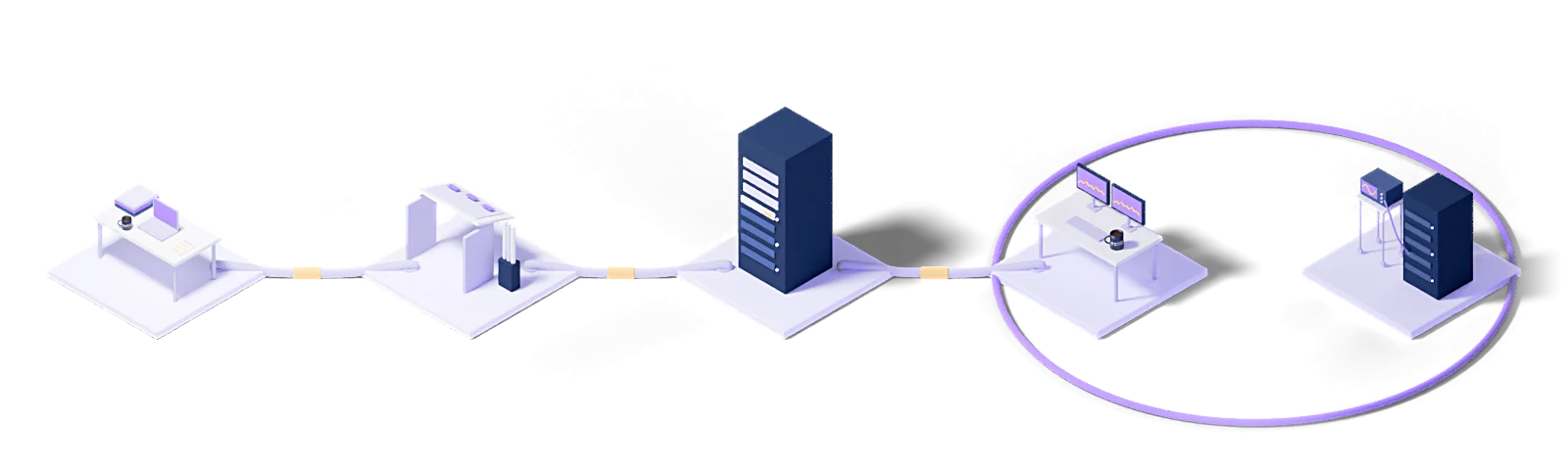
Assess
Baseline the current state, name the gaps and put the success criteria in writing.
Design
Architect the target operating model and the toolchain it needs.
Deploy
Implement, configure and validate in a staged rollout.
Operate
24/7 management with contracted response times and proactive monitoring.
Improve
Continuous improvement driven by metrics, incidents and changes in the business.
Every engagement runs under a written SLA: a commitment, not a best-effort promise.
Dedicated engineers who know your stack. No generalist help-desk tier in between.
Service reviews every two weeks, roadmap updates every quarter.
Who uses this
The industries we run System Reliability & Preventive Maintenance for.
The technologies we run this on
The concepts behind this service
- Fault management
- The process of detecting, classifying, resolving and recording a fault.
This section explains the technical terms used on this page. The definitions come from Eclit's own technology glossary, and each term links through to its full entry there.
The full technology glossary →Knowledge Hub
What we have written about running and managing technology, collected in one place.
Reliability Friday 11: Terraform Drift, and Why "No changes" Is Not Proof
4 min readReliability Friday 10: Why a Firewall Drops Packets at 30% Bandwidth
3 min readReliability Friday 09: How Load Balancer Retries Multiply Backend Traffic
3 min readReliability Friday 03: How to Build an Incident Escalation Matrix
4 min readReliability Friday 01: How to Measure PostgreSQL Replication Lag
4 min readHow to Run a Disaster Recovery Failover Test That Proves Something
4 min readEveryone Runs Prometheus: So Why Do We Still Hear About Incidents Late?
4 min readWhat Is a Load Balancer and How Does It Work?
8 min readWhat Is Uptime and How Is It Calculated? 99.9% vs 99.99%
8 min read01What exactly does preventive maintenance cover?
Scheduled checks: disk health and predictive failure warnings, redundant power and fan status, filesystem growth trends, log accumulation, certificate expiry dates and backup verification. All of these can be caught before they turn into a fault.
02The same fault keeps recurring. Do you find the root cause?
Yes. After an incident we run a root cause analysis, and its output is a corrective action. A recurring incident is not treated as closed; real closure means the same incident can no longer happen.
03How often are maintenance windows scheduled, and when?
Monthly, in the hours when your load is lowest. Window dates are shared in advance, the planned work is listed, and a rollback plan is written for each item.
04How do you prevent certificates from expiring?
Every TLS certificate is added to the inventory and its expiry tracked; renewal warnings come early and automatic renewal is set up where possible. An expired certificate is among the most common causes of avoidable downtime.
05Can you see capacity bottlenecks coming?
Yes. We measure CPU, memory, disk and network usage trends and calculate when each threshold will be reached. That turns a capacity increase into a planned change rather than an emergency.
Let's work out where to start
Within two weeks you get it in writing: what works, what carries risk, and a prioritized roadmap.
Request a conversation