Database Platform Engineering
We design, build, and operate enterprise database platforms that perform under heavy load, scale horizontally, and recover automatically from failure. From Oracle RAC clusters to distributed PostgreSQL and cloud-native DBaaS, our database platform engineers own the full lifecycle: architecture, provisioning, tuning, HA configuration, and 24/7 operations.
What we deliver
We design database platforms for your workload profile, whether OLTP-heavy with millisecond SLAs or analytical with terabyte-scale queries. Architecture decisions cover storage engine selection, partitioning strategy, indexing, and replication topology.
Systematic performance analysis using execution plans, wait event analysis, and workload profiling. We identify and resolve top SQL offenders, index fragmentation, locking conflicts, and resource saturation before they impact your business.
Configuration of Oracle Data Guard, PostgreSQL streaming replication, MySQL Group Replication, and SQL Server Always On. We validate failover paths, test RPO/RTO under simulated failures, and document runbooks for every HA scenario.
Least-privilege user management, encrypted connections (TLS), transparent data encryption (TDE), audit trail configuration, and compliance-ready access controls aligned to ISO 27001, PCI-DSS, and KVKK/GDPR requirements.
Automated backup schedules, regular recovery testing, and point-in-time restore validation. We prove backups work through structured restore drills and include database tiers in your overall DR plan.
Proactive capacity analysis based on historical growth trends, query volume forecasting, and storage projections. We prevent surprise outages by identifying resource exhaustion risks weeks in advance.
How it works
Every engagement follows the same five steps: baseline the current state, design the target model, roll out in stages, operate it, and improve against measurements.
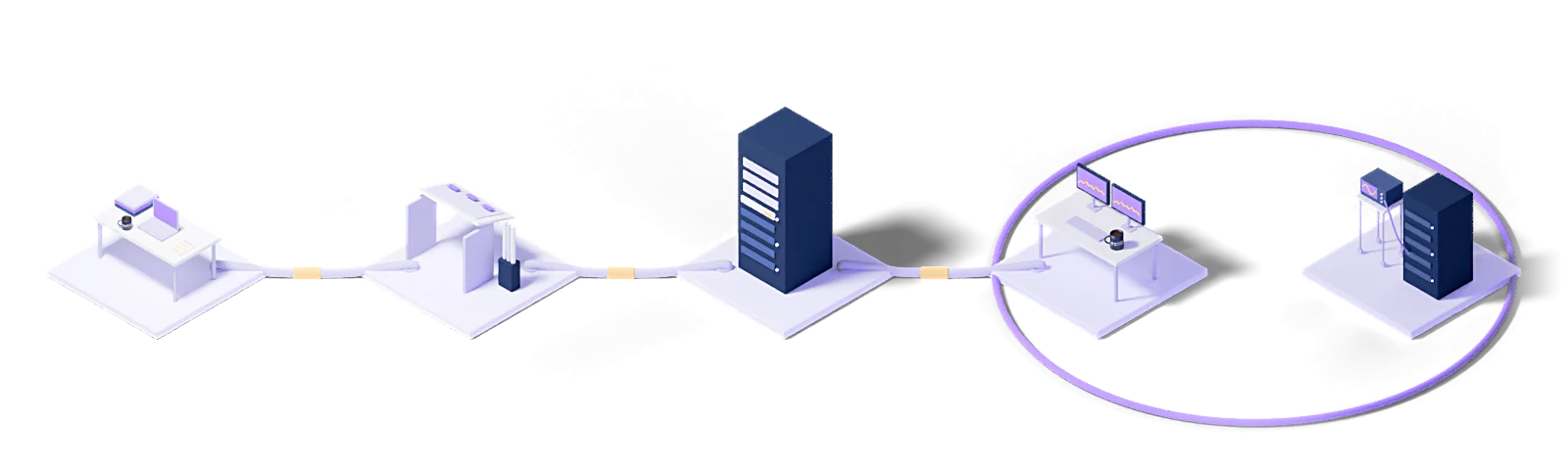
Assess
Baseline the current state, name the gaps and put the success criteria in writing.
Design
Architect the target operating model and the toolchain it needs.
Deploy
Implement, configure and validate in a staged rollout.
Operate
24/7 management with contracted response times and proactive monitoring.
Improve
Continuous improvement driven by metrics, incidents and changes in the business.
Every engagement runs under a written SLA: a commitment, not a best-effort promise.
Dedicated engineers who know your stack. No generalist help-desk tier in between.
Service reviews every two weeks, roadmap updates every quarter.
The concepts behind this service
- Big data
- Datasets too large, too fast-moving or too varied to process with conventional tools.
- Data lake
- A pool where structured and unstructured data is stored raw, with no schema imposed up front.
- Data warehouse
- A structured store where data from different sources is gathered for analysis.
This section explains the technical terms used on this page. The definitions come from Eclit's own technology glossary, and each term links through to its full entry there.
The full technology glossary →Knowledge Hub
What we have written about running and managing technology, collected in one place.
PostgreSQL or MongoDB? The Answer Depends on Access Patterns, Not Data Shape
4 min readReliability Friday 01: How to Measure PostgreSQL Replication Lag
4 min readEveryone Uses Terraform, but Who Is Catching the Drift?
3 min readWhy AI Projects Stall, and Why the Answer Is AI-Ready Data
6 min readWhat Is a DBA? What Does a Database Administrator Do?
7 min readWhat Is a Database Management System (DBMS)? Types, Examples
7 min readWhat Is SQL? SQL Commands, MySQL and SQL Server Explained
9 min readWhat Is PostgreSQL? Features, Versions and MySQL Differences
10 min readWhat Is NoSQL? Redis, MongoDB and SQL vs NoSQL
10 min readWhat Are ETL and ELT? Data Warehouse vs Data Lake
9 min readWhat Is RAG (Retrieval-Augmented Generation)? How It Works
10 min readWhat Is DBaaS (Database as a Service)? Managed Databases
10 min read01What is the difference between platform engineering and database operations?
Operations keeps a running database up. Platform engineering builds the standard it stands on: reference architecture and automated provisioning, with backup and monitoring included by default. Without the second, every new database is built differently.
02Can you build self-service database provisioning?
Yes. Development teams can request a database from an approved template; because version, size, backup and access policy are defined in the template, every deployment is built to the same standard.
03What does a standard database template include?
Hardened configuration, backup schedule, monitoring and alert thresholds, connection pool settings, and a user and role layout. The template is versioned; changes are rolled out to existing deployments as planned work.
04Different teams run different database versions. How do we consolidate?
First an inventory of which versions run where, then a defined set of supported versions, then a migration plan for everything outside that set. Consolidation is phased, not done in one move.
05Do you manage schema changes as well?
The development team owns the schema, but the pipeline for applying changes safely is ours: versioned migrations, test environment first, a rollback path in production, and a method that avoids locking on large tables.
Let's work out where to start
Within two weeks you get it in writing: what works, what carries risk, and a prioritized roadmap.
Request a conversation