Application Runtime & Middleware Operations
We take operational ownership of your application runtime, handling JVM tuning, middleware configuration, connection pooling and service health across multi-tier architectures. Our engineers cover JBoss, WebLogic, Tomcat, NGINX and custom microservice runtimes, and keep every layer of your application stack fast and stable.
What we deliver
Deep-dive heap analysis, GC tuning, and thread pool optimization for Java and JVM-based runtimes. We baseline, profile, and continuously tune to eliminate latency spikes and memory pressure.
Version-controlled configuration for WebLogic, JBoss EAP, Tomcat, NGINX, and IIS. All changes are tracked, tested in staging, and rolled back automatically if anomalies are detected post-deploy.
Continuous health checks, synthetic transaction monitoring, and alerting tied to your SLAs. We monitor response time, error rate, throughput, and saturation across all runtime layers, 24/7.
JDBC connection pool sizing, thread executor configuration, and queue depth management to prevent connection exhaustion under peak load, which is critical for high-traffic transaction systems.
Blue-green and rolling deployment orchestration for middleware-hosted applications. We validate each deployment with automated smoke tests before traffic is shifted to the new version.
Structured incident response using ITIL-aligned processes: detection, containment, resolution, and post-incident reviews. Every P1/P2 incident results in a detailed RCA report within 24 hours.
How it works
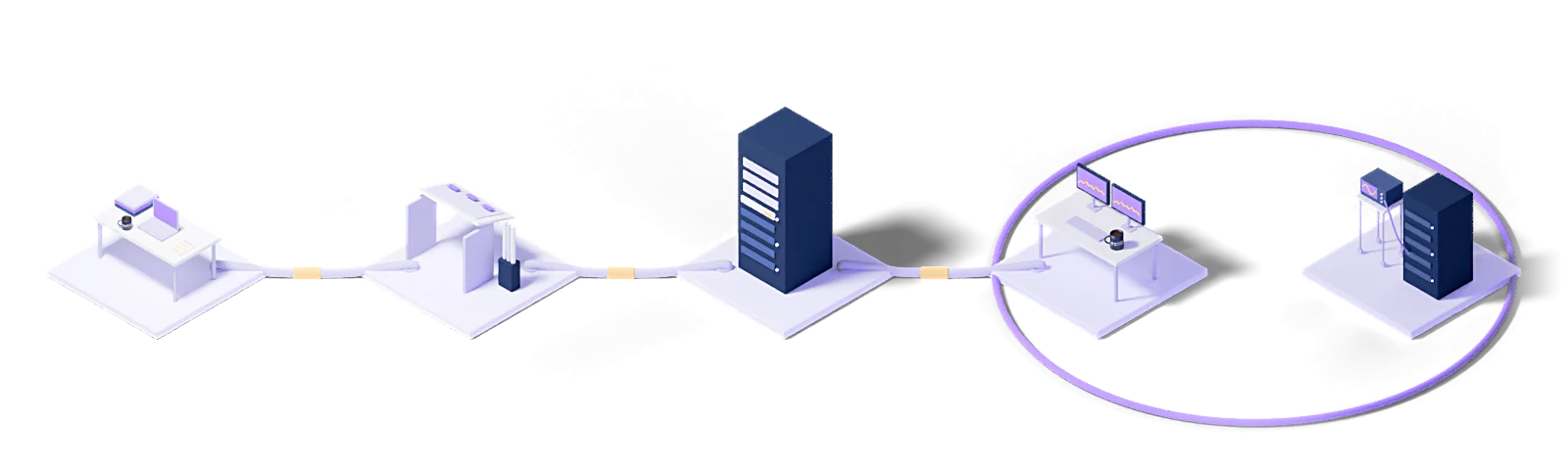
Every engagement follows the same five steps: baseline the current state, design the target model, roll out in stages, operate it, and improve against measurements.
Assess
Baseline the current state, name the gaps and put the success criteria in writing.
Design
Architect the target operating model and the toolchain it needs.
Deploy
Implement, configure and validate in a staged rollout.
Operate
24/7 management with contracted response times and proactive monitoring.
Improve
Continuous improvement driven by metrics, incidents and changes in the business.
Every engagement runs under a written SLA: a commitment, not a best-effort promise.
Dedicated engineers who know your stack. No generalist help-desk tier in between.
Service reviews every two weeks, roadmap updates every quarter.
Who uses this
The industries we run Application Runtime & Middleware Operations for.
The concepts behind this service
- Backend
- The part of an application the user never sees: server logic, database and integrations.
- Managed web server
- Web server configuration, certificate management, security and performance tuning delivered as a service.
- Queue
- A structure where work accumulates to be processed in order.
This section explains the technical terms used on this page. The definitions come from Eclit's own technology glossary, and each term links through to its full entry there.
The full technology glossary →Knowledge Hub
What we have written about running and managing technology, collected in one place.
What Is a Web Server? NGINX, Apache and IIS Explained
9 min readWhat Is HTTP? HTTPS Difference, Methods, Status Codes and HTTP/3
7 min readEveryone Runs Prometheus: So Why Do We Still Hear About Incidents Late?
4 min readPostgreSQL or MongoDB? The Answer Depends on Access Patterns, Not Data Shape
4 min readEveryone Uses Terraform, but Who Is Catching the Drift?
3 min readWhat Is an API? REST APIs, API Gateways and API Security
10 min read01Which application servers and middleware are in scope?
We operate Tomcat, WildFly/JBoss, WebLogic, WebSphere, IIS and nginx/Apache front ends. The initial inventory shows which versions run in your environment, and we define the scope based on it.
02Do you handle Java version upgrades?
We handle the runtime side: installing the new version, a side-by-side test environment, a rollback plan and the cutover. Making the application compatible is the development team's work; we report incompatibilities during testing.
03Do you touch our application code?
No. Our responsibility is the runtime, the middleware and the configuration. Where the cause is in code, we hand your developers the finding, the stack trace and the reproduction steps.
04How do you catch memory leaks and thread pool exhaustion?
JVM and application server metrics are collected continuously: heap usage, garbage collection pauses, thread pool saturation, connection pool wait times. When a threshold is crossed, heap and thread dumps are taken automatically and attached to the incident record.
05Who holds the WebLogic and WebSphere licenses?
The licenses stay with you; we operate the platforms. We track renewal dates and end-of-support milestones and flag the cost impact ahead of time. An assessment of open-source alternatives can be included in the same scope.
Let's work out where to start
Within two weeks you get it in writing: what works, what carries risk, and a prioritized roadmap.
Request a conversation