Data Security & DLP
Data security and loss prevention. We build data classification, sensitive data discovery, channel-based policies, and encryption with key management together.
What we deliver
Defining which data is confidential, personal or regulated, and establishing the labeling scheme. Without classification no protection policy can be written.
Scanning file shares, databases and endpoints for where sensitive data has accumulated. In most organizations it is not where it is assumed to be.
Rules for data leaving via email, web, removable media and cloud upload, applied in stages rather than all at once.
Data encrypted at rest and in transit, keys managed separately, and rotation processes defined.
Real personal data kept out of test and development environments, with masking rules built into environment refreshes.
The technical side of data inventory, processing records and retention periods established, with disposal processes run in an auditable way.
How it works
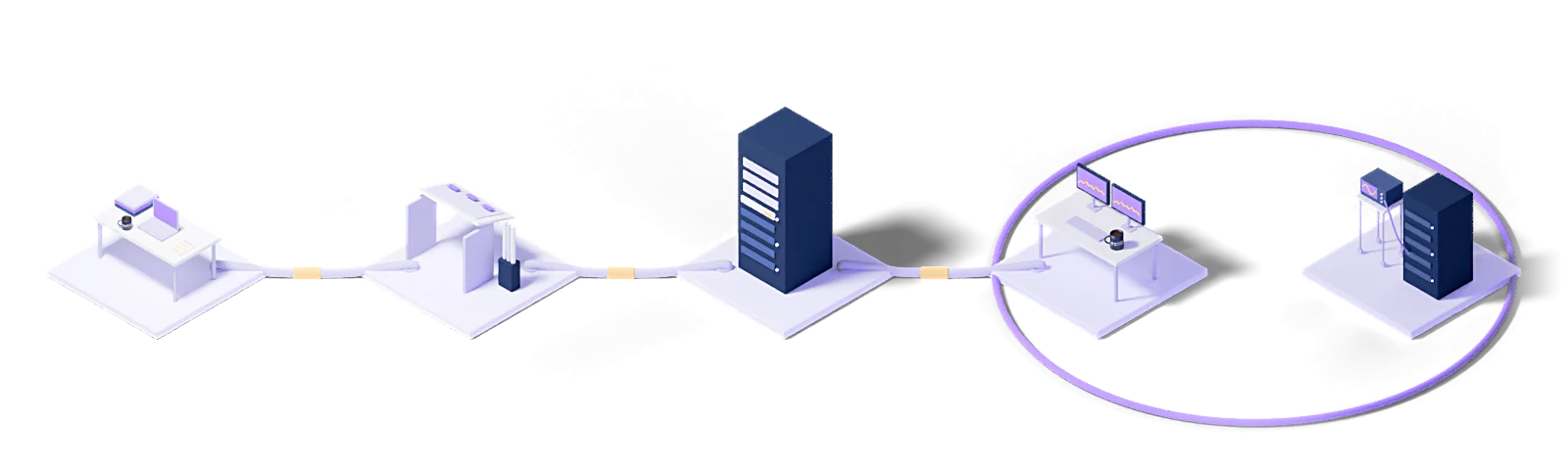
Every engagement follows the same five steps: baseline the current state, design the target model, roll out in stages, operate it, and improve against measurements.
Assess
Baseline the current state, name the gaps and put the success criteria in writing.
Design
Architect the target operating model and the toolchain it needs.
Deploy
Implement, configure and validate in a staged rollout.
Operate
24/7 management with contracted response times and proactive monitoring.
Improve
Continuous improvement driven by metrics, incidents and changes in the business.
Every engagement runs under a written SLA: a commitment, not a best-effort promise.
Dedicated engineers who know your stack. No generalist help-desk tier in between.
Service reviews every two weeks, roadmap updates every quarter.
Who uses this
The industries we run Data Security & DLP for.
The concepts behind this service
- Data privacy
- Protecting personal and sensitive data against unauthorized access and disclosure.
This section explains the technical terms used on this page. The definitions come from Eclit's own technology glossary, and each term links through to its full entry there.
The full technology glossary →Knowledge Hub
What we have written about running and managing technology, collected in one place.
What Is DLP (Data Loss Prevention)? How Does It Work?
9 min readWhat Is KVKK? Türkiye's Law No. 6698, Obligations and Fines
11 min readKVKK Cross-Border Data Transfer: What to Check When Using the Cloud
5 min readRansomware Recovery Playbook: Immutable Backups and Journal Rewind
4 min readHow Long ISO 27001 Certification Actually Takes
5 min readHow to Build 72-Hour Data Breach Notification Readiness
7 min readWhat Is RAG (Retrieval-Augmented Generation)? How It Works
10 min readWhat Is Data Poisoning in AI, and How Do You Prevent It?
9 min read01Will DLP get in our employees' way?
If badly deployed, yes. That is why the first stage is observation only: rules run without blocking and what actually flows is measured. Blocking is turned on only after the false positive rate has come down to an acceptable level.
02How do we decide which data to protect?
Through data classification. Trying to protect everything ends in protecting nothing. Defined categories (identity numbers, card data, health data, contract documents) are established first, and rules are written against them.
03Is DLP mandatory under KVKK?
The law names no product; it requires appropriate technical measures. DLP is one way to address data leakage risk and can be cited in an audit as a measure taken, but it is not considered sufficient on its own.
04Can you inspect encrypted traffic?
Technically possible, but not applied everywhere. Banking, health and personal account traffic is usually excluded; the categories that are inspected are set out in written policy and communicated to employees.
05Do employees have to be informed?
Yes. Where monitoring takes place in the workplace, informing employees is required under both KVKK and employment law. We prepare the privacy notice and internal policy as part of the work.
Let's work out where to start
Within two weeks you get it in writing: what works, what carries risk, and a prioritized roadmap.
Request a conversation