Network Protection (DDoS, Bot Mitigation)
Network protection: DDoS mitigation, bot management, edge filtering, and routing policies configured before an attack rather than during it.
What we deliver
A mitigation layer against volumetric and application-layer attacks, with scrubbing center routing and time-to-activate measured in advance.
We sort automated traffic, letting search engine crawlers through while limiting scraping and credential stuffing.
Geographic filtering, reputation-based blocking and rate limiting applied at the edge so unwanted traffic never reaches the application.
Routing policies for use during an attack, configured beforehand and tested in drills. A defense assembled mid-attack comes too late.
We learn your normal traffic profile and catch early deviations in volume, source distribution and request patterns.
After an attack, we review the traffic records, measure how well the defenses worked and update the configuration for the next one.
How it works
Every engagement follows the same five steps: baseline the current state, design the target model, roll out in stages, operate it, and improve against measurements.
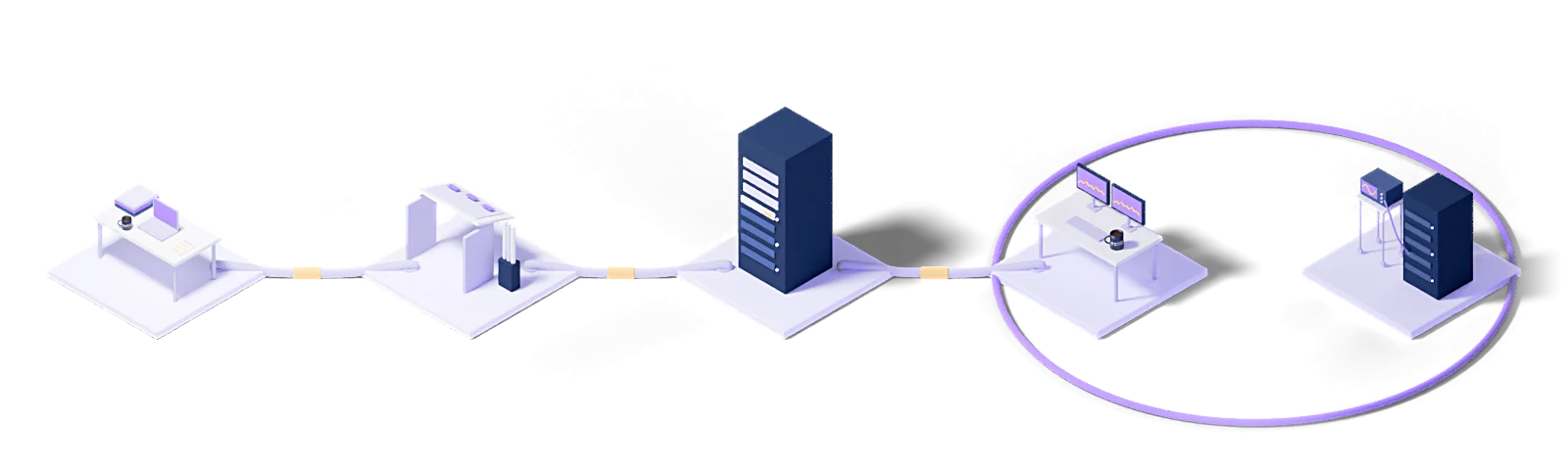
Assess
Baseline the current state, name the gaps and put the success criteria in writing.
Design
Architect the target operating model and the toolchain it needs.
Deploy
Implement, configure and validate in a staged rollout.
Operate
24/7 management with contracted response times and proactive monitoring.
Improve
Continuous improvement driven by metrics, incidents and changes in the business.
Every engagement runs under a written SLA: a commitment, not a best-effort promise.
Dedicated engineers who know your stack. No generalist help-desk tier in between.
Service reviews every two weeks, roadmap updates every quarter.
Who uses this
The industries we run Network Protection (DDoS, Bot Mitigation) for.
The technologies we run this on
The concepts behind this service
- CDN
- Content delivery network.
- DDoS
- A distributed denial-of-service attack, which makes a target unreachable with traffic from many sources.
This section explains the technical terms used on this page. The definitions come from Eclit's own technology glossary, and each term links through to its full entry there.
The full technology glossary →Knowledge Hub
What we have written about running and managing technology, collected in one place.
What Is a DDoS Attack? Types, Botnets and Protection
9 min readWhat Is a CDN? How a Content Delivery Network Works
10 min readWhat Is DNS and How Does It Work? Servers and Record Types
10 min readDoes Türkiye's Cybersecurity Law Apply to You? The 15 Critical Infrastructure Sectors
5 min readRansomware Recovery Playbook: Immutable Backups and Journal Rewind
4 min readLog Retention Periods: Which Records to Keep and for How Long
4 min readWhat Is a WAF? How a Web Application Firewall Works
8 min readWhat Is Network Security? Layers and Core Controls
9 min read01How quickly do you respond during a DDoS attack?
Automatic mitigation engages within seconds; redirecting to a scrubbing center for volumetric attacks takes minutes. Those times assume the protection was configured in advance; anything set up during the attack starts too late to help.
02How do we know we are under attack?
We monitor traffic volume, request rate and source distribution continuously, and an alert fires when the anomaly threshold is crossed. The first step is working out whether slowness comes from an attack or from the application: the two need very different responses.
03Will bot protection block legitimate crawlers?
Not when it is configured properly. We define an allow list for search and answer engine crawlers and verify them by reverse DNS. Without that, the site can drop out of search results, which is the most expensive side effect of bot protection.
04Is protection always on, or does it engage during an attack?
We recommend always-on protection. On-demand protection misses the first minutes of an attack, and those are usually the most damaging.
05Should we buy cloud-based protection rather than build our own?
For volumetric attacks, cloud-based protection is the only realistic option: the attack traffic never reaches your circuit. Protection inside your own infrastructure is useless once the circuit is saturated.
Let's work out where to start
Within two weeks you get it in writing: what works, what carries risk, and a prioritized roadmap.
Request a conversation