Application Security (WAF)
Application-layer security. Web application firewall deployment, rule tuning, API protection, and false positives cleared without taking production down.
What we deliver
Web application firewall placement, SSL termination and traffic flow set up without disrupting the application.
Rules run in monitoring mode first, false positives cleared against real traffic, then blocking enabled. Doing it the other way around takes production down.
Schema validation, rate limiting and abuse detection on REST and GraphQL endpoints. API traffic needs a different protection profile from web traffic.
Rule sets kept current against injection, broken authentication, insecure object references and the other widely exploited application weaknesses.
Blocked requests, attack types and source distribution reported, with raw records kept accessible for investigation.
Conflicts between application changes and WAF rules caught in advance, and releases coordinated with the protection layer.
How it works
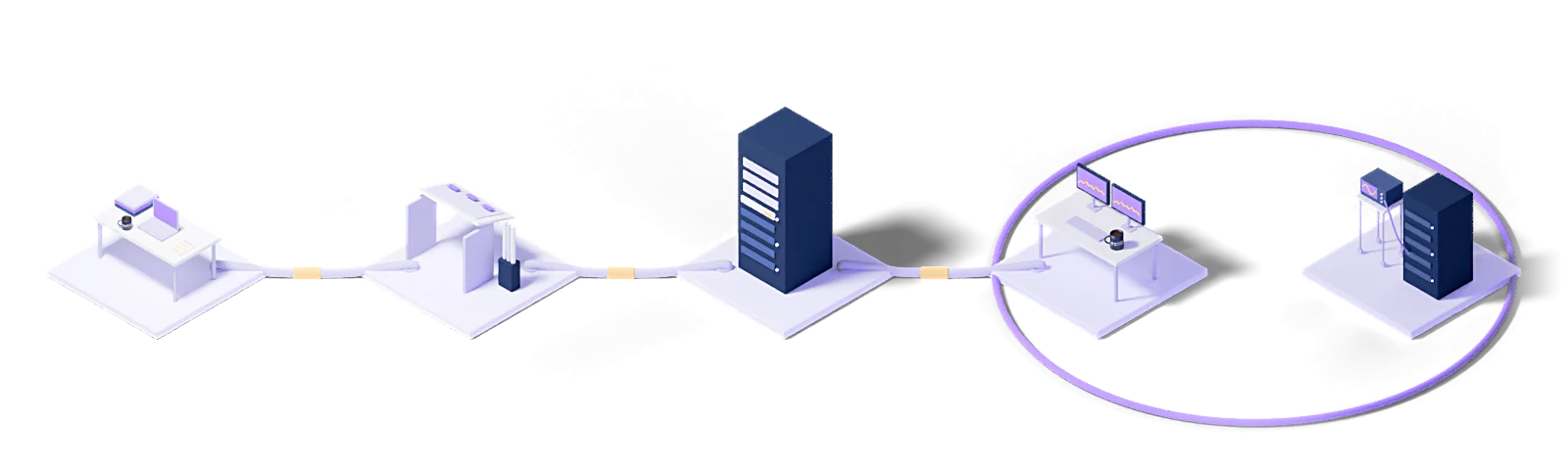
Every engagement follows the same five steps: baseline the current state, design the target model, roll out in stages, operate it, and improve against measurements.
Assess
Baseline the current state, name the gaps and put the success criteria in writing.
Design
Architect the target operating model and the toolchain it needs.
Deploy
Implement, configure and validate in a staged rollout.
Operate
24/7 management with contracted response times and proactive monitoring.
Improve
Continuous improvement driven by metrics, incidents and changes in the business.
Every engagement runs under a written SLA: a commitment, not a best-effort promise.
Dedicated engineers who know your stack. No generalist help-desk tier in between.
Service reviews every two weeks, roadmap updates every quarter.
Who uses this
The industries we run Application Security (WAF) for.
The concepts behind this service
- API
- Application programming interface — the defined contract through which two pieces of software talk to each other.
- Web application firewall (WAF)
- A security layer protecting web applications against application-layer attacks.
This section explains the technical terms used on this page. The definitions come from Eclit's own technology glossary, and each term links through to its full entry there.
The full technology glossary →Knowledge Hub
What we have written about running and managing technology, collected in one place.
What Is a WAF? How a Web Application Firewall Works
8 min readWhat Is HTTP? HTTPS Difference, Methods, Status Codes and HTTP/3
7 min readPHP2Shell: A 5-Step Checklist for the Critical PHP Vulnerabilities
8 min readDoes Türkiye's Cybersecurity Law Apply to You? The 15 Critical Infrastructure Sectors
5 min readRansomware Recovery Playbook: Immutable Backups and Journal Rewind
4 min readLog Retention Periods: Which Records to Keep and for How Long
4 min readWhat Is a Proxy Server? Forward vs Reverse Proxy
8 min readWhat Is a Firewall? Types, NGFW and DMZ Explained
9 min readWhat Is a DDoS Attack? Types, Botnets and Protection
9 min readWhat Is an SSL Certificate? SSL vs TLS vs HTTPS
11 min readWhat Is a CDN? How a Content Delivery Network Works
10 min readWhat Is an API? REST APIs, API Gateways and API Security
10 min readWhat Is SQL Injection (SQLi)? Types and How to Prevent It
10 min readWhat Is XSS (Cross-Site Scripting)? Types and Prevention
10 min read01Will a WAF slow our application down?
It adds measurable latency, typically a few milliseconds. The bigger risk is blocking legitimate traffic, which is why we deploy in monitoring mode first and weed out false positives against real traffic.
02Does a WAF close code-level vulnerabilities?
No. It blocks known attack patterns, but the vulnerability stays in the code. Virtual patching buys time until a fix ships; it is not a permanent solution.
03How do you identify bot traffic?
Behavioral analysis, rate limiting and fingerprinting used together. Legitimate bots such as search engine crawlers are allowlisted separately, because over-aggressive bot protection can hurt SEO directly.
04Is DDoS protection included?
Application-layer attacks are within WAF scope. Volumetric attacks need separate protection at the network layer; the two are different layers, and we plan them together.
05Does it protect our APIs too?
Yes, but it needs separate configuration. API traffic differs from browser traffic: schema validation, rate limiting and identity checks come to the fore. Rules written for the web are both incomplete and noisy on an API.
Let's work out where to start
Within two weeks you get it in writing: what works, what carries risk, and a prioritized roadmap.
Request a conversation