Managed Platform Services (DBaaS, HANA, etc.)
Enterprise database and application platforms (SAP HANA, Oracle, PostgreSQL, SQL Server) operated as a service. Licensing, infrastructure, redundancy and round-the-clock operations sit in one contract, so your team works on the application rather than the database.
What we deliver
We handle installation, version upgrades, patching, backup and monitoring. You get a connection string; the server, storage and replication layer beneath it stay out of your way.
HANA's in-memory architecture makes capacity planning different from planning for an ordinary database: data growth translates directly into RAM requirements. We plan sizing, HA/DR configuration and version maintenance around that.
Synchronous replication takes data loss to zero but adds latency; asynchronous does the reverse. The RPO each workload can tolerate determines which mode its database runs in.
Query plan analysis, index maintenance, connection pool tuning and capacity forecasting against the growth curve. Slowdowns show up in measurement before they arrive as complaints.
Separation of privileged accounts, query-level audit logging and a documented authorization matrix: the first items requested in an ISO 27001 or KVKK audit.
End-of-support tracking, upgrades with a rollback plan in hand, and cross-platform migration. The upgrade window is planned around your business calendar and the rollback steps are written down before it opens.
How it works
Every engagement follows the same five steps: baseline the current state, design the target model, roll out in stages, operate it, and improve against measurements.
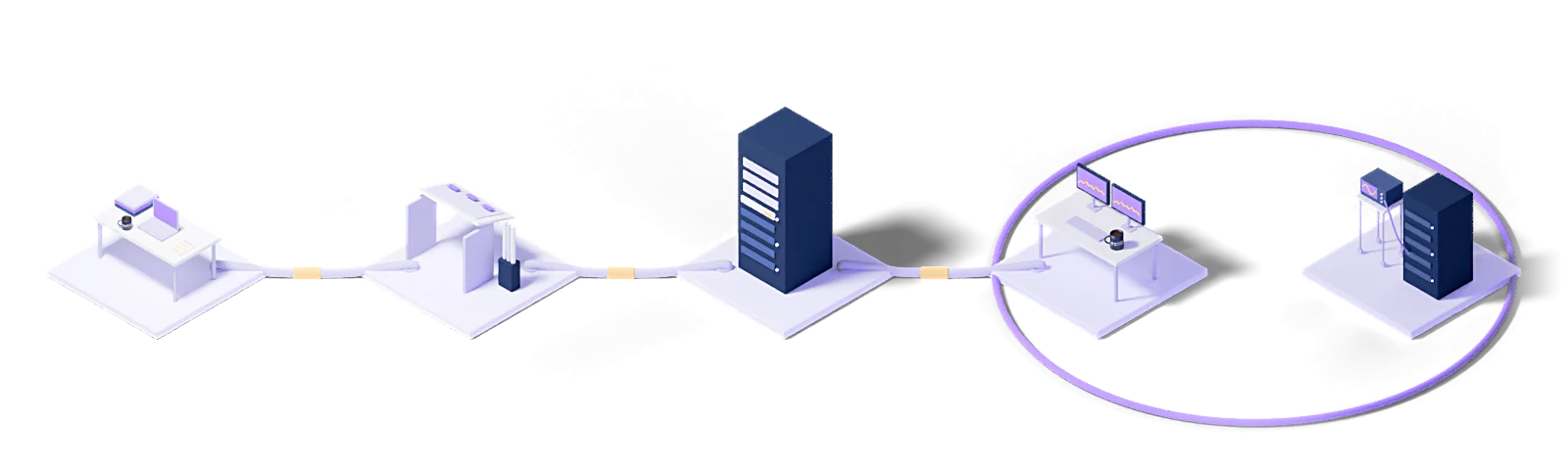
Assess
Baseline the current state, name the gaps and put the success criteria in writing.
Design
Architect the target operating model and the toolchain it needs.
Deploy
Implement, configure and validate in a staged rollout.
Operate
24/7 management with contracted response times and proactive monitoring.
Improve
Continuous improvement driven by metrics, incidents and changes in the business.
Every engagement runs under a written SLA: a commitment, not a best-effort promise.
Dedicated engineers who know your stack. No generalist help-desk tier in between.
Service reviews every two weeks, roadmap updates every quarter.
The technologies we run this on
The concepts behind this service
- MSP (managed service provider)
- A provider that takes on the operation of IT infrastructure under contract.
- Uptime
- The proportion of time a system stays available.
- SLA (service level agreement)
- The contract annex defining the service level a provider commits to.
This section explains the technical terms used on this page. The definitions come from Eclit's own technology glossary, and each term links through to its full entry there.
The full technology glossary →Knowledge Hub
What we have written about running and managing technology, collected in one place.
What Is an MSP? A Guide to Managed Services
10 min readChoosing an MSP: What Turkish Companies Actually Want
7 min read10 Questions to Ask When Choosing a Managed Service Provider
5 min readFirst Place in Managed Services at Bilişim 500
2 min readBDDK Treats Cloud as Outsourcing: What Changes for Banks
5 min readWhat Is a DBA? What Does a Database Administrator Do?
7 min readWhat Is a Database Management System (DBMS)? Types, Examples
7 min readWhat Is DBaaS (Database as a Service)? Managed Databases
10 min read01What is the difference between database as a service and running it ourselves?
Who owns what. With DBaaS, upgrades, patching, backup, high availability and monitoring sit with us; schema, queries and data sit with you. Running it yourself puts all of it on you, and one person leaving becomes an operational risk.
02Do you operate specialized platforms such as SAP HANA?
Yes. On HANA, Oracle and similar certified platforms we stay inside the vendor-supported configuration boundaries: an unsupported build means no vendor help on the day something breaks.
03What infrastructure does the platform run on?
Your choice: Eclit data centers, your own colocation, or public cloud. Where you have a data residency requirement, the location is written into the contract.
04What happens if our resource needs grow?
We monitor usage trends and tell you before a threshold is reached. Scaling happens as a planned change; finding out on the day capacity runs out is a planning failure.
05If we want to leave the platform, how do we get our data out?
A full export in standard formats, within a period defined in the contract. An exit path written down from day one matters more than how you get in.
Let's work out where to start
Within two weeks you get it in writing: what works, what carries risk, and a prioritized roadmap.
Request a conversation