End User Experience & Support (8×5 or 24/7)
End user support and experience management. An 8×5 or 24/7 service desk, device support, resolution time measurement, and root-cause fixes for recurring issues.
What we deliver
A single point of contact with logging, prioritization and routing run through a defined process. 8×5 or 24/7 coverage, depending on your needs.
Setup, configuration and troubleshooting across laptops, desktops and mobile devices, plus user-level support for office applications, VPN and business systems.
First-contact resolution rate, mean time to resolve and reopen rate measured and reported. That way, improvement is backed by data.
An issue that keeps coming back is an infrastructure problem, not a support problem. Recurring tickets are traced to root cause and a permanent fix planned.
Resolution articles for common issues and self-service content, so simple requests are solved before they reach the desk.
Device, account and access preparation completed on time for new joiners, and access fully removed and recorded on departure.
How it works
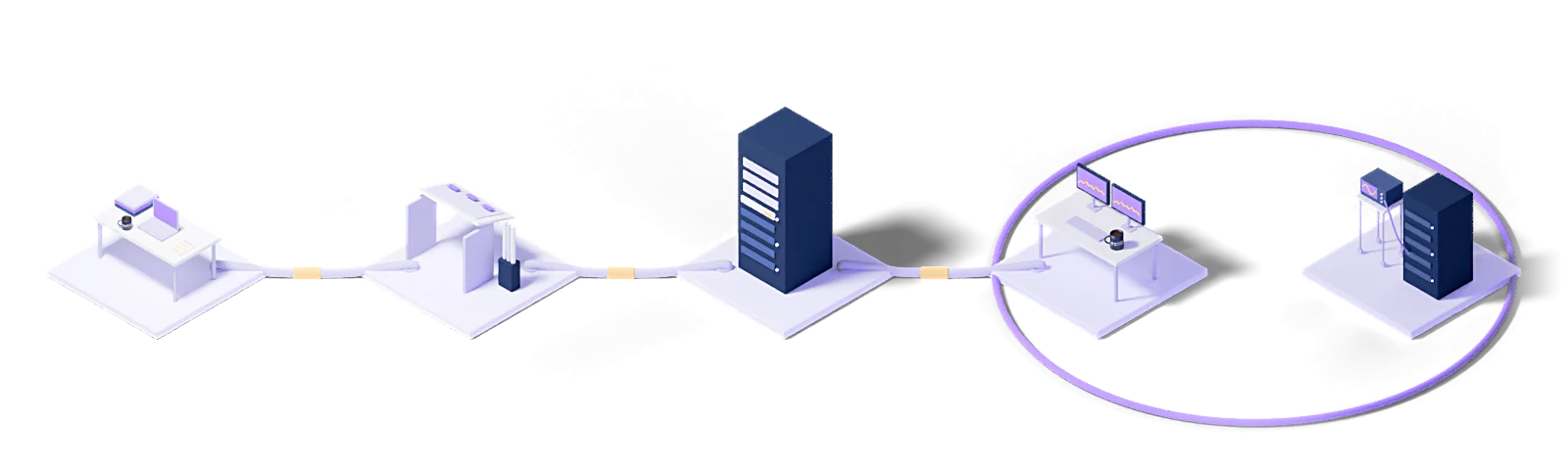
Every engagement follows the same five steps: baseline the current state, design the target model, roll out in stages, operate it, and improve against measurements.
Assess
Baseline the current state, name the gaps and put the success criteria in writing.
Design
Architect the target operating model and the toolchain it needs.
Deploy
Implement, configure and validate in a staged rollout.
Operate
24/7 management with contracted response times and proactive monitoring.
Improve
Continuous improvement driven by metrics, incidents and changes in the business.
Every engagement runs under a written SLA: a commitment, not a best-effort promise.
Dedicated engineers who know your stack. No generalist help-desk tier in between.
Service reviews every two weeks, roadmap updates every quarter.
The concepts behind this service
- Service desk
- The single point of contact for user requests and incident tickets.
This section explains the technical terms used on this page. The definitions come from Eclit's own technology glossary, and each term links through to its full entry there.
The full technology glossary →Knowledge Hub
What we have written about running and managing technology, collected in one place.
01How do you measure end-user experience?
Ticket counts and resolution times alone are not enough. Application launch times, sign-in duration, device performance and a satisfaction survey are read together. A user who never raises a ticket but struggles with slowness every day shows up in no ticket statistic.
02How do we choose between 8×5 and 24/7?
By looking at your users' working hours and what an out-of-hours fault costs. In shift-based manufacturing or retail, 24/7 is usually necessary; in an office-hours organization, 8×5 can be enough.
03Do you measure user satisfaction?
Yes, with a short survey on closed tickets. Low-scoring tickets are reviewed separately: a ticket that looks resolved but did not help the user counts as a success in the statistics when it is not one.
04Do you build a knowledge base?
Yes. Solutions to frequent requests are written up and can be made available to users. The self-service resolution rate is reported too; each solved request should help prevent the next one.
05Are our remote teams in scope?
Yes. Coverage includes remote access, VPN, device health, and isolating problems caused by the home network. For a remote worker, telling whether the problem is on the corporate side or their own connection is the first step to solving it.
Let's work out where to start
Within two weeks you get it in writing: what works, what carries risk, and a prioritized roadmap.
Request a conversation