Network Security
Next-generation firewall management, network segmentation, zero-trust architecture and continuous traffic analysis, protecting every packet across your entire estate.
What we deliver
Design, deploy and manage NGFW solutions from leading vendors across your entire network estate (on-prem, cloud and hybrid), with 24/7 monitoring and policy management.
Divide your network into secure zones to limit lateral movement. Microsegmentation at the workload level ensures that even if one segment is breached, others remain protected.
Design and implement a zero-trust network model where no user or device is trusted by default, enforcing continuous verification and least-privilege access.
Deploy SD-WAN solutions with built-in security controls, and provide secure remote access for hybrid workers without compromising network performance or visibility.
Continuous analysis of network traffic flows to detect anomalous behavior, lateral movement, data exfiltration attempts and policy violations in real time.
Comprehensive review of your existing network security posture, identifying gaps, misconfigurations and vulnerabilities with prioritized remediation recommendations.
How it works
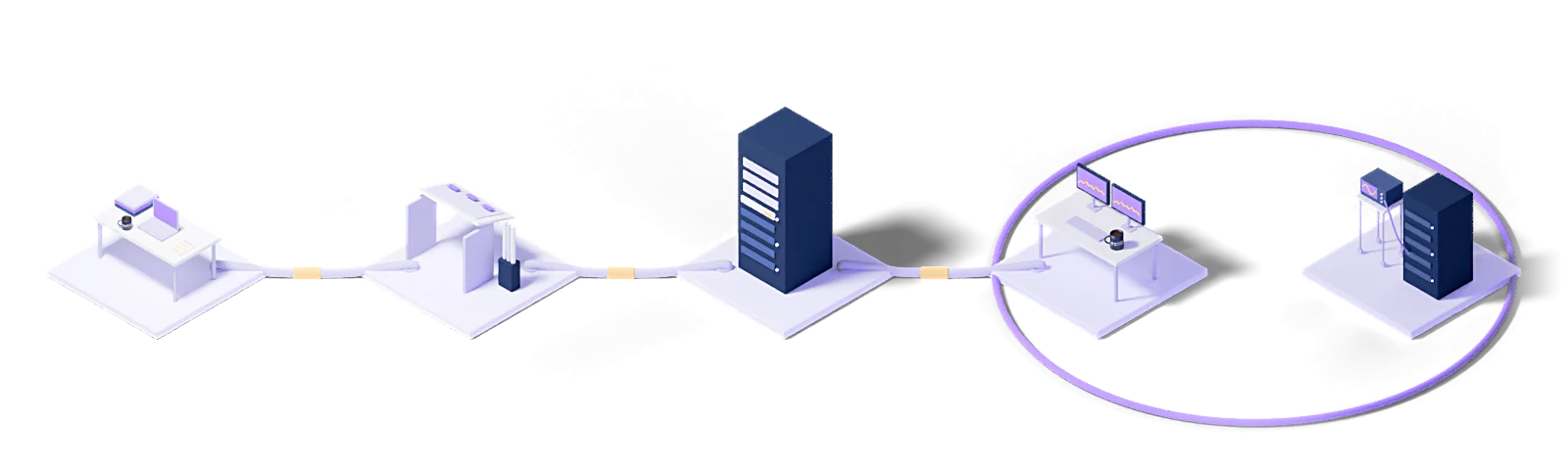
Every engagement follows the same five steps: baseline the current state, design the target model, roll out in stages, operate it, and improve against measurements.
Assess
Baseline the current state, name the gaps and put the success criteria in writing.
Design
Architect the target operating model and the toolchain it needs.
Deploy
Implement, configure and validate in a staged rollout.
Operate
24/7 management with contracted response times and proactive monitoring.
Improve
Continuous improvement driven by metrics, incidents and changes in the business.
Every engagement runs under a written SLA: a commitment, not a best-effort promise.
Dedicated engineers who know your stack. No generalist help-desk tier in between.
Service reviews every two weeks, roadmap updates every quarter.
Who uses this
The industries we run Network Security for.
The technologies we run this on
The concepts behind this service
- Network security
- Protecting data and systems on a network against unauthorized access, attack and malicious software.
- Firewall
- A system that inspects network traffic against defined rules and blocks unauthorized access.
- Proxy server
- A server that mediates between client and destination, used for access control, caching and traffic logging.
- VPN
- Technology that establishes an encrypted private connection over a public network.
This section explains the technical terms used on this page. The definitions come from Eclit's own technology glossary, and each term links through to its full entry there.
The full technology glossary →Knowledge Hub
What we have written about running and managing technology, collected in one place.
Reliability Friday 10: Why a Firewall Drops Packets at 30% Bandwidth
3 min readWhat Is Network Security? Layers and Core Controls
9 min readWhat Is a Firewall? Types, NGFW and DMZ Explained
9 min readWhat Is a VPN and How Does It Work? Enterprise VPN vs ZTNA
10 min readWhat Is an Intranet? Difference from Internet and Extranet, How to Build One
6 min readWhat Are the OSI Layers? The 7-Layer OSI Model and the TCP/IP Difference
6 min readWhat Is a Gateway? Difference from a Router and the Types
5 min readWhat Is a DDoS Attack? Types, Botnets and Protection
9 min readWhat Is a Proxy Server? Forward vs Reverse Proxy
8 min readWhat Is a Port? Port Numbers and Port Security
7 min readDoes Türkiye's Cybersecurity Law Apply to You? The 15 Critical Infrastructure Sectors
5 min readRansomware Recovery Playbook: Immutable Backups and Journal Rewind
4 min readLog Retention Periods: Which Records to Keep and for How Long
4 min readWhat Is SD-WAN? What It Does and How It Differs From MPLS
8 min readWhat Is a LAN? How LAN, WAN and MAN Differ
7 min readWhat Is Cybersecurity? Types, Threats and Core Controls
9 min readWhat Is a Router? How It Differs From a Modem and Switch
9 min readWhat Is NAT? Network Address Translation, PAT and CGNAT
10 min readWhat Is a VLAN? Virtual LANs, Trunk and Access Ports
9 min readWhat Is a VPC (Virtual Private Cloud)? Subnets and Security
11 min readWhat Is a Brute Force Attack, and How Do You Prevent It?
10 min read01Our firewall rules have piled up over the years. Can they be cleaned up?
Yes, based on measurement. We collect rule hit counters, and rules that have not matched anything for months become candidates. Removal is phased: disable first, observe, then delete, because a rule that fires rarely may genuinely be needed once a year.
02Where should we start with network segmentation?
With the zone holding the critical assets. Splitting the whole network at once does not work in practice; first separate server and user networks, then the critical application zone, then tighten in stages. Each step means observing the traffic before restricting it.
03Is zero trust realistic for us?
As a goal, yes. As a single migration, no. Stronger authentication, making device health a condition of access, and per-application access are built step by step. No product changes an existing estate overnight.
04For remote access, VPN or zero trust network access?
VPN puts the user on the network; zero trust puts them only on the application they need. The second sharply limits lateral movement but requires an application inventory and a ready identity layer. During the transition, the two usually run in parallel for a while.
05Who approves rule changes?
The change process is wired into your approval flow. Every rule change is recorded with its justification, requester and approver: what an audit asks most often is not the rule itself but why it was added.
Let's work out where to start
Within two weeks you get it in writing: what works, what carries risk, and a prioritized roadmap.
Request a conversation