KVKK / GDPR
Dual-regulation data protection compliance, KVKK for Türkiye and GDPR for EU markets, managed together as a single integrated program. Audit-ready at all times.
What we deliver
A full compliance program under Türkiye's Personal Data Protection Law (KVKK), covering the data inventory, VERBİS registration, privacy notices, explicit-consent mechanisms and the required administrative and technical measures.
Full GDPR compliance across data mapping, lawful basis documentation, subject rights processes, data breach notification procedures and DPA reporting, with EU and UK variants covered.
Build and maintain your Record of Processing Activities (ROPA) and data flow maps across all processing activities, the foundation of demonstrable GDPR and KVKK compliance.
Draft, review and maintain GDPR- and KVKK-compliant privacy notices, cookie policies and consent capture mechanisms, aligned to the latest regulatory guidance.
Direct support for ICO, KVKK (KVK Kurumu) and other supervisory authority inquiries, from initial response through to investigation management and remediation.
Review and draft Controller-Processor and Controller-Controller agreements with vendors, processors and joint controllers, ensuring your contractual data protection obligations are met.
How it works
Every engagement follows the same five steps: baseline the current state, design the target model, roll out in stages, operate it, and improve against measurements.
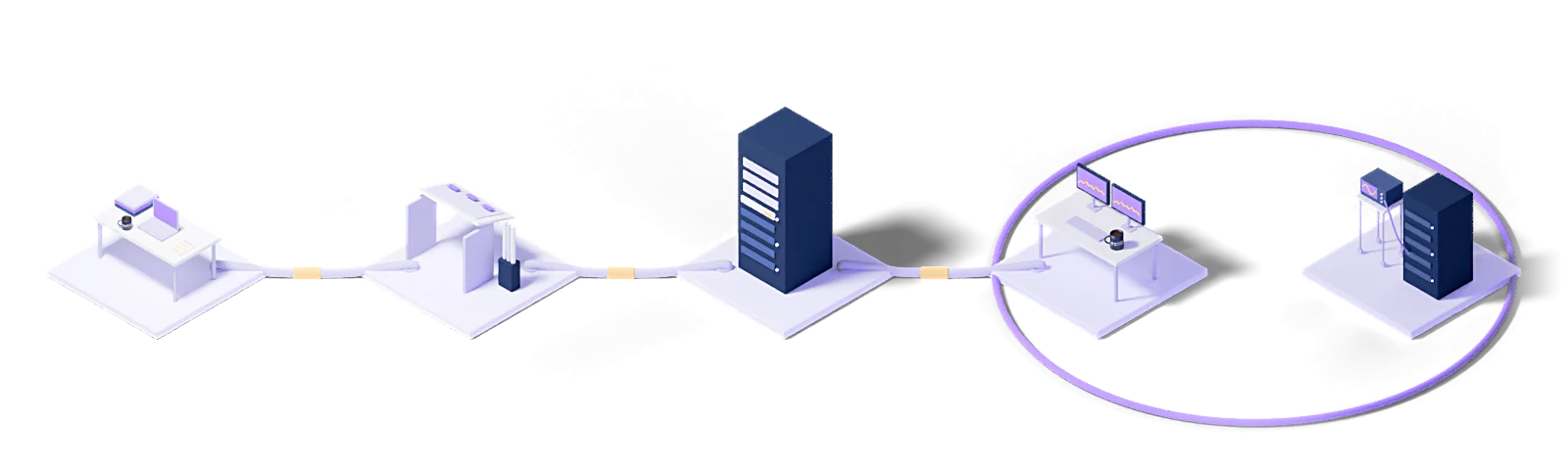
Assess
Baseline the current state, name the gaps and put the success criteria in writing.
Design
Architect the target operating model and the toolchain it needs.
Deploy
Implement, configure and validate in a staged rollout.
Operate
24/7 management with contracted response times and proactive monitoring.
Improve
Continuous improvement driven by metrics, incidents and changes in the business.
Every engagement runs under a written SLA: a commitment, not a best-effort promise.
Dedicated engineers who know your stack. No generalist help-desk tier in between.
Service reviews every two weeks, roadmap updates every quarter.
Who uses this
The industries we run KVKK / GDPR for.
The technologies we run this on
The concepts behind this service
- Cookies
- Small pieces of data websites store in the browser.
- SaaS (Software-as-a-Service)
- Software used over the internet with nothing to install.
- Data
- Raw, unprocessed information.
- KVKK (Turkish data protection law)
- Türkiye's personal data protection law.
This section explains the technical terms used on this page. The definitions come from Eclit's own technology glossary, and each term links through to its full entry there.
The full technology glossary →Knowledge Hub
What we have written about running and managing technology, collected in one place.
What Is ISO 27001? How Certification Works and Who Must Have It
10 min readWhat Is KVKK? Türkiye's Law No. 6698, Obligations and Fines
11 min readKVKK Cross-Border Data Transfer: What to Check When Using the Cloud
5 min readLog Retention Periods: Which Records to Keep and for How Long
4 min readHow Long ISO 27001 Certification Actually Takes
5 min readWhy a Ransomware Victim Was Fined by Türkiye's KVKK
6 min readHow to Build 72-Hour Data Breach Notification Readiness
7 min readWhat Is DLP (Data Loss Prevention)? How Does It Work?
9 min read01What should the first step towards KVKK compliance be?
A data inventory. Without establishing which personal data you process, for what purpose, on what legal ground and where you transfer it, no technical measure can be sized correctly. The VERBİS registration is built on that inventory too.
02Are a privacy notice and explicit consent the same thing?
No, and confusing them is the most common mistake. The notice is a disclosure obligation and cannot be made conditional on consent. Explicit consent is only required where no other legal ground applies: most processing can rest on contract or legitimate interest.
03How can data be transferred abroad?
Under Article 9 as amended by Law No. 7499: an adequacy decision, standard contractual clauses, or binding corporate rules. Explicit consent covers only occasional transfers. Where standard clauses are used, they must be notified to the Authority within five business days of signature.
04Do the differences between KVKK and GDPR concern us?
If you have customers or employees in Europe, yes. The two regimes are broadly similar but differ on transfers, the data protection officer requirement and administrative fine ceilings. Compliance with both can be built in a single framework.
05What is needed on the technical side?
Access control, logging, encryption, retention and disposal automation, breach detection, and the search capability to answer data subject requests. The last is the most commonly missed: an organization that cannot find where the data is cannot meet a deletion request in time.
Let's work out where to start
Within two weeks you get it in writing: what works, what carries risk, and a prioritized roadmap.
Request a conversation