End User Support
Your employees need fast, expert help at any hour. With our managed helpdesk, every user leaves with a resolution, not a ticket number.
What we deliver
Round-the-clock support via phone, email, chat and a self-service portal, answered by certified engineers rather than operators reading from scripts.
Remote and on-site support for Windows, macOS and Linux devices, including imaging, configuration and hardware troubleshooting.
Troubleshooting and user guidance for Microsoft 365, Google Workspace, ERP systems and your line-of-business applications.
Secure enrollment, policy enforcement and remote wipe for smartphones and tablets across iOS and Android.
Response and resolution targets for every ticket severity level, written into the contract, with measured times reported against them.
Step-by-step onboarding and training resources that speed up user adoption and reduce repeat tickets.
How it works
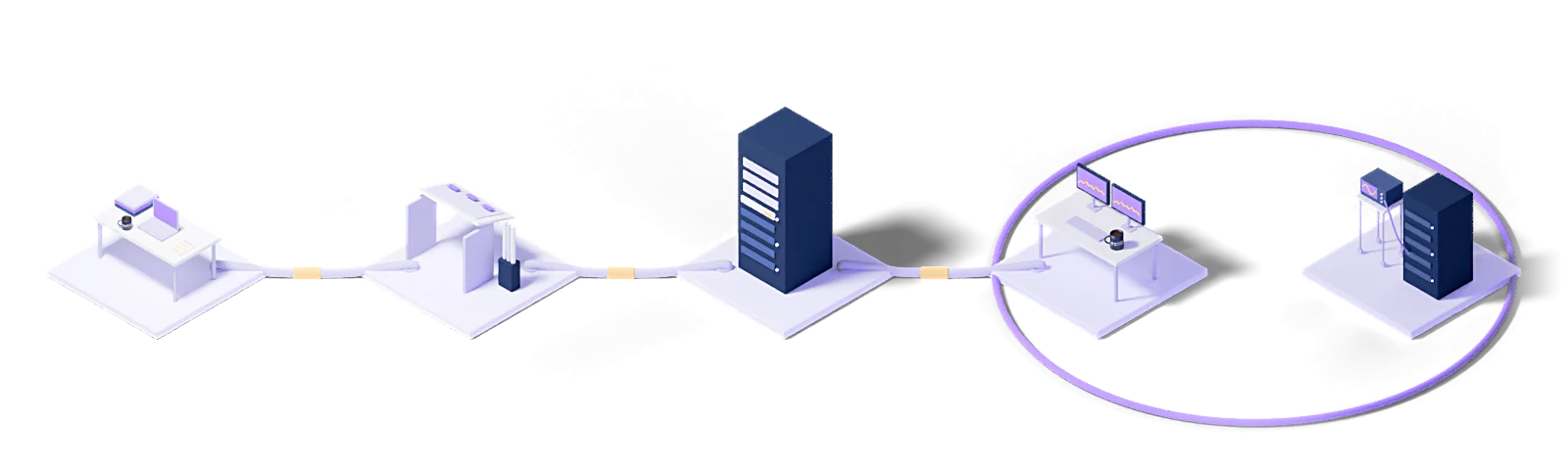
Every engagement follows the same five steps: baseline the current state, design the target model, roll out in stages, operate it, and improve against measurements.
Assess
Baseline the current state, name the gaps and put the success criteria in writing.
Design
Architect the target operating model and the toolchain it needs.
Deploy
Implement, configure and validate in a staged rollout.
Operate
24/7 management with contracted response times and proactive monitoring.
Improve
Continuous improvement driven by metrics, incidents and changes in the business.
Every engagement runs under a written SLA: a commitment, not a best-effort promise.
Dedicated engineers who know your stack. No generalist help-desk tier in between.
Service reviews every two weeks, roadmap updates every quarter.
The technologies we run this on
Knowledge Hub
What we have written about running and managing technology, collected in one place.
What Is an MSP? A Guide to Managed Services
10 min read10 Questions to Ask When Choosing a Managed Service Provider
5 min readFirst Place in Managed Services at Bilişim 500
2 min readRansomware Recovery Playbook: Immutable Backups and Journal Rewind
4 min readWhat Is ITIL? ITIL Version 5 and IT Service Management
8 min readWhat Are IT Services? Types and IT Service Management (ITSM)
9 min read01What are your support hours?
Two models: 8×5 during business hours, or 24/7. Which fits depends on how your users work and what an out-of-hours fault costs you.
02How do you commit to first-response and resolution times?
Requests are classified by priority, and each class has its own first-response and resolution target written into the contract. Measured times appear alongside the target in the monthly report, so you can check that each commitment is being met.
03How do our users raise a request?
Service desk portal, email and phone. All three land in the same record, so the history of a request stays in one place even when the channel changes.
04Do you provide on-site support as well?
Yes, for hardware faults and installations that cannot be resolved remotely. Scope and locations are defined in the contract; the remote resolution rate is also reported, because the higher it is, the less your users wait.
05Do you find the root cause of repeat requests?
Yes. Requests are counted by category and repeats are handled separately: the root cause is usually a configuration error, a training gap or aging hardware. Fixing that costs less than solving the same request again every month.
Let's work out where to start
Within two weeks you get it in writing: what works, what carries risk, and a prioritized roadmap.
Request a conversation