Data Protection & Recovery
No data loss. No surprise downtime. Our managed backup and disaster recovery service gives you contractually guaranteed RTO and RPO targets, and the proven ability to meet them.
What we deliver
Policy-driven, encrypted backups across all workloads (on-prem, cloud and SaaS), with daily verification and air-gapped copies.
DR strategies designed for your environment, with defined RTO and RPO targets, documented runbooks and regular failover testing.
Scheduled and ad-hoc recovery drills that validate your ability to restore operations within agreed timeframes, with the measured recovery time reported.
Ransomware-resilient backup copies stored in immutable object storage and offsite vaults.
Tiered storage policies that automatically move aging data to cost-optimized tiers without compromising access.
Automated compliance reports for KVKK, GDPR, ISO 27001 and other frameworks, giving auditors what they need.
How it works
Every engagement follows the same five steps: baseline the current state, design the target model, roll out in stages, operate it, and improve against measurements.
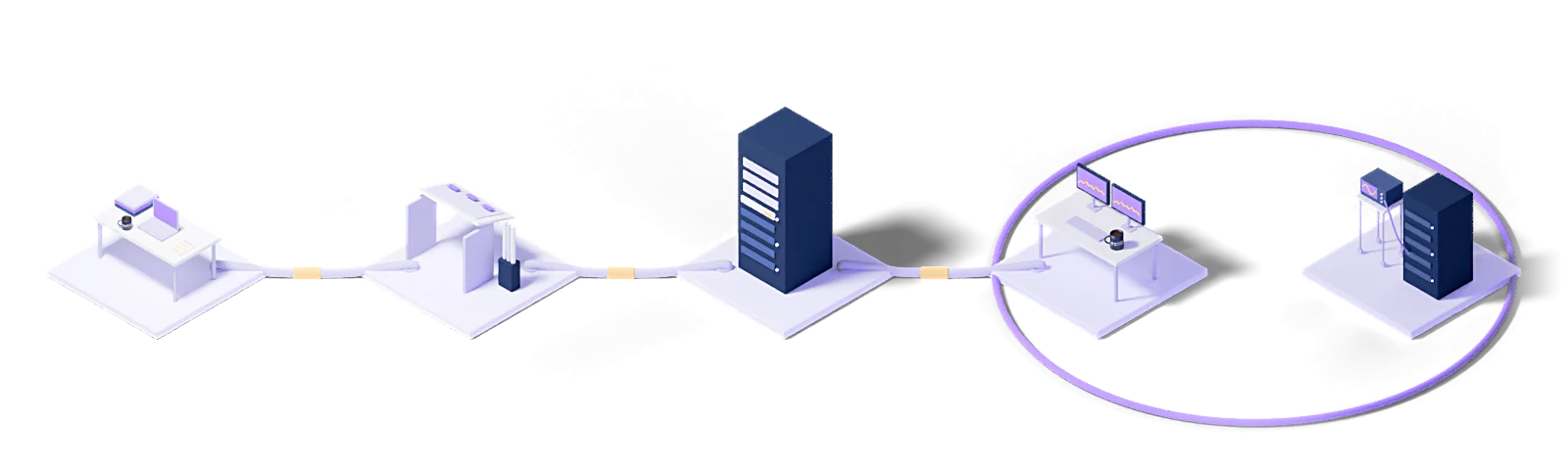
Assess
Baseline the current state, name the gaps and put the success criteria in writing.
Design
Architect the target operating model and the toolchain it needs.
Deploy
Implement, configure and validate in a staged rollout.
Operate
24/7 management with contracted response times and proactive monitoring.
Improve
Continuous improvement driven by metrics, incidents and changes in the business.
Every engagement runs under a written SLA: a commitment, not a best-effort promise.
Dedicated engineers who know your stack. No generalist help-desk tier in between.
Service reviews every two weeks, roadmap updates every quarter.
Who uses this
The industries we run Data Protection & Recovery for.
Knowledge Hub
What we have written about running and managing technology, collected in one place.
You Have Backups, but Can You Recover? Veeam, Zerto and the Recovery Gap
3 min readRansomware Recovery Playbook: Immutable Backups and Journal Rewind
4 min readKVKK Cross-Border Data Transfer: What to Check When Using the Cloud
5 min readWhat Is Backup? Backup Types and the 3-2-1 Rule
8 min readWhat Is Disaster Recovery? How to Build a DR Plan
8 min readWhat Is a Disaster Recovery Site (FKM)? How to Build One and Who Must Have It
9 min readWhat Is Ransomware? How Attacks Work and How to Prevent Them
9 min readWhat Is NAS? Network Attached Storage vs SAN
9 min readWhat Is Backup as a Service (BaaS)? How Cloud Backup Works
10 min read01Is data protection the same thing as backup?
No. Backup is one part of it. The others are replication, archiving, retention policy, deletion obligations and recovery testing. An organization with only backups may not have the deletion capability KVKK requires.
02How do we meet KVKK retention and disposal obligations?
Retention periods are defined per data category, periodic disposal runs when a period expires, and a disposal record is kept. Copies inside backups fall under the same policy: that is the most commonly missed part in an audit.
03How often do you run recovery tests?
The usual arrangement is quarterly for critical systems and every six months for the rest. Until a plan has been tested, nobody knows whether it works, so the measured recovery time is reported after every test.
04If we lose data, how far back can we go?
As far back as the retention policy allows. Short-term fast recovery and long-term archive are built as separate tiers, each with its own retention period, because their costs differ too.
05Who holds the encryption keys?
That is up to you; where organizational control matters, the keys stay with you. Key management is a responsibility in its own right, because losing the key has the same outcome as losing the data.
Let's work out where to start
Within two weeks you get it in writing: what works, what carries risk, and a prioritized roadmap.
Request a conversation