System Integration
Connect your systems, unify your data and eliminate the silos that slow your business down. API-led integration, event streaming, ERP/CRM connectivity and managed integration operations.
What we deliver
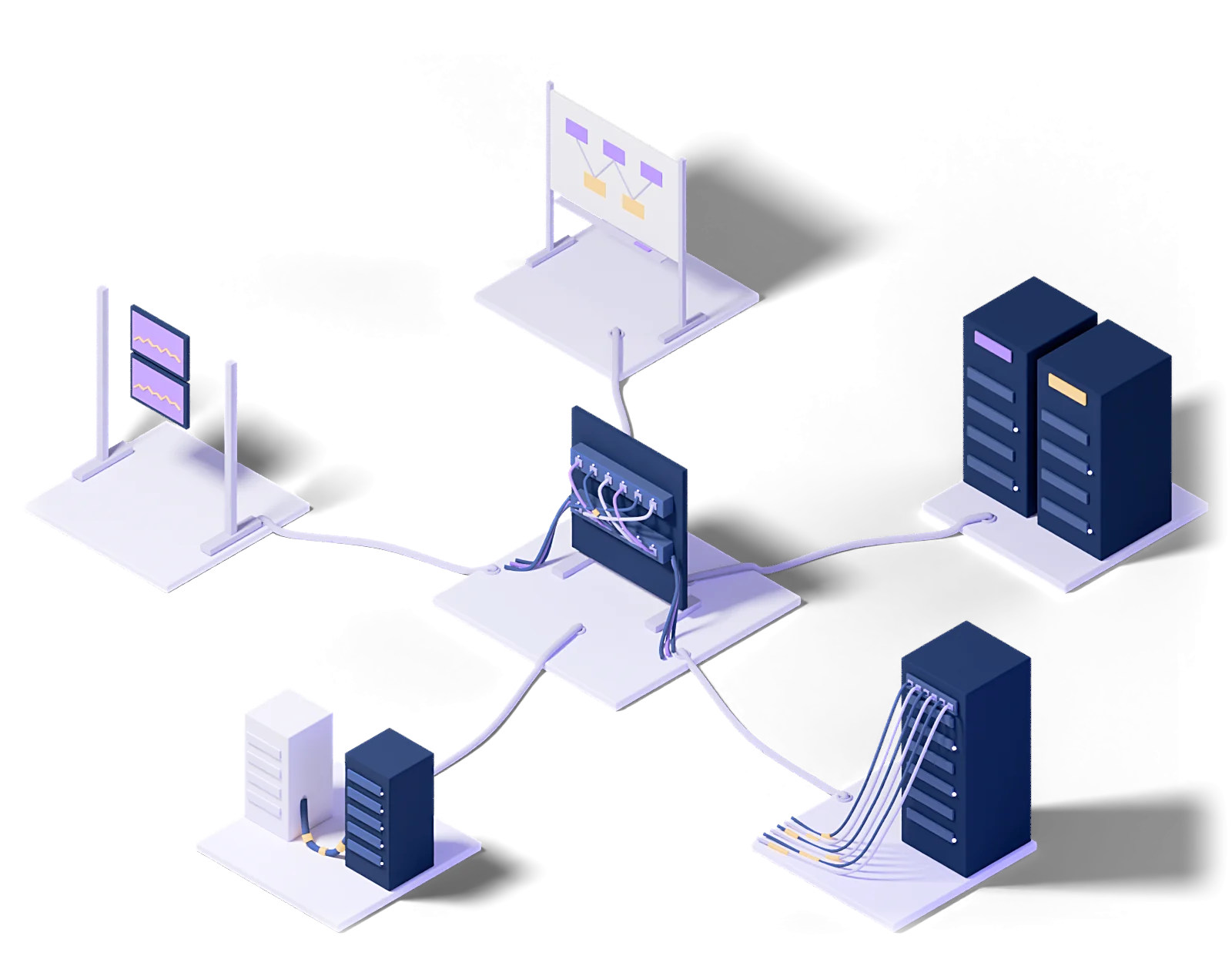
Design a scalable, maintainable integration architecture, selecting the right pattern (API-led, event-driven, ETL, middleware) for your technology stack and data flows.
Build RESTful and GraphQL APIs that expose your business capabilities securely and at scale, with API gateway management, versioning, documentation and developer portals.
Connect your ERP, CRM, ITSM and line-of-business systems so they share consistent data, with no silos and real-time visibility across all of them.
Implement event streaming and messaging architectures (Kafka, Azure Service Bus, AWS SNS/SQS) that decouple systems, improve resilience and enable real-time data propagation.
Design and build data integration pipelines that move, transform and reconcile data across systems reliably, supporting reporting, analytics and operational data flows.
Continuous monitoring of integration flows, early alerts on failures or latency, and managed operations support that keeps your integrated systems connected and reliable.
How it works
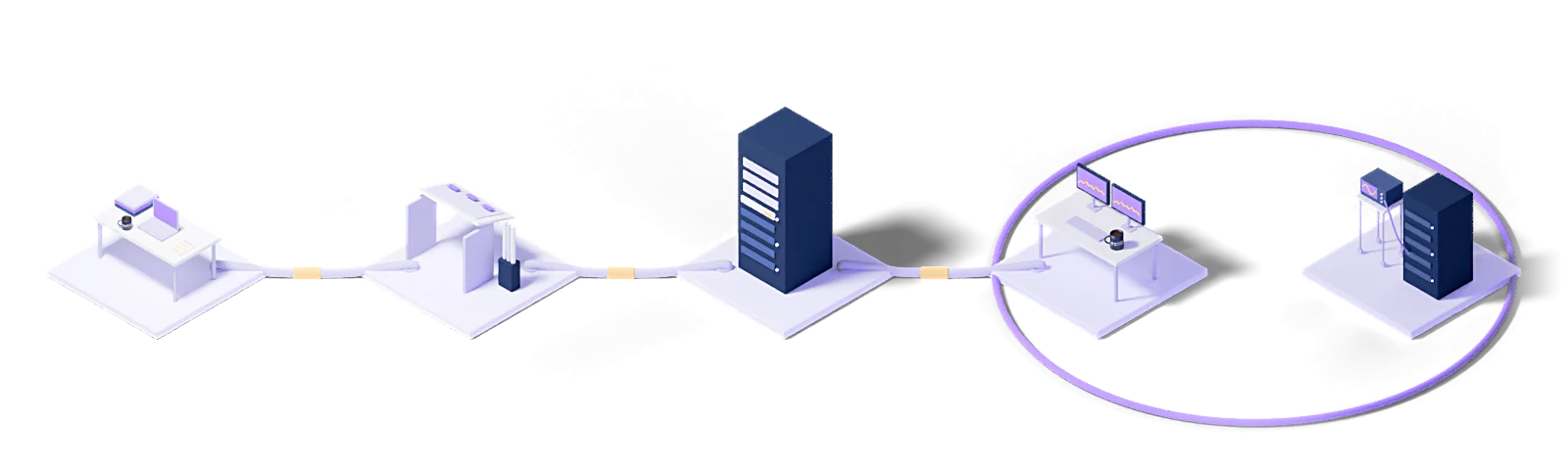
Every engagement follows the same five steps: baseline the current state, design the target model, roll out in stages, operate it, and improve against measurements.
Assess
Baseline the current state, name the gaps and put the success criteria in writing.
Design
Architect the target operating model and the toolchain it needs.
Deploy
Implement, configure and validate in a staged rollout.
Operate
24/7 management with contracted response times and proactive monitoring.
Improve
Continuous improvement driven by metrics, incidents and changes in the business.
Every engagement runs under a written SLA: a commitment, not a best-effort promise.
Dedicated engineers who know your stack. No generalist help-desk tier in between.
Service reviews every two weeks, roadmap updates every quarter.
The technologies we run this on
The concepts behind this service
- Integration
- Connecting different systems at the data and process level.
This section explains the technical terms used on this page. The definitions come from Eclit's own technology glossary, and each term links through to its full entry there.
The full technology glossary →Knowledge Hub
What we have written about running and managing technology, collected in one place.
What Is SaaS? Examples, Benefits and SaaS Integration
7 min readPostgreSQL or MongoDB? The Answer Depends on Access Patterns, Not Data Shape
4 min readEveryone Uses Terraform, but Who Is Catching the Drift?
3 min readDisaster Recovery Strategy for Enterprises: Zerto, Veeam and the RPO/RTO Decision
7 min readWhat Are ETL and ELT? Data Warehouse vs Data Lake
9 min readWhat Is an API? REST APIs, API Gateways and API Security
10 min readWhat Is n8n? What It Does, Deployment Options and Licensing
6 min readWhat Is MCP (Model Context Protocol)? Servers and Security
9 min read01How does a system integration project start?
With scope and a data contract. Which data flows, in which direction, how often and under what rules: start development before these are written down, and you will end up rewriting the integration later.
02Can integration be done without a test environment?
It can, but it should not. Testing in production with production data leads to errors that cannot be undone. At minimum an end-to-end test channel is needed; its cost is lower than that of a single bad batch run.
03How are performance problems prevented?
Through volume estimation. How many records per day, how many at peak, how much processing per record: calculated in advance and proven with a load test. Integrations tested on small data seize up at real volume.
04Who owns the integration?
Ownership is agreed in writing: which side is responsible for which failure, who monitors it, and who is called during an incident. An unowned integration produces the longest outages, because each side waits for the other.
05Is documentation delivered?
Yes: flow diagram, data contract, error codes and a response runbook. Without documentation, an integration becomes a black box the day its author leaves.
Let's work out where to start
Within two weeks you get it in writing: what works, what carries risk, and a prioritized roadmap.
Request a conversation