Migration & Integration Engineering
Migration and integration engineering: data center moves, platform transitions and system integrations, executed to plan with a rollback path at every stage.
What we deliver
Scope, sequence, cutover window and resourcing set out, with an owner, a duration and a verification criterion defined for every step.
Interfaces designed up front: data format, error handling, retry policy and monitoring points defined before the first line of code is written.
Incremental synchronization to shorten the cutover window, integrity verified at switchover, and the source kept readable for a period afterwards.
A dry run before the real cutover: we time it, surface the problems and fix them, which lowers the risk of the actual move.
A defined rollback step and decision point for each stage. A migration without a rollback plan is a bet, not a plan.
Functional verification, performance comparison and business acceptance. The project closes only when the business signs off.
How it works
Every engagement follows the same five steps: baseline the current state, design the target model, roll out in stages, operate it, and improve against measurements.
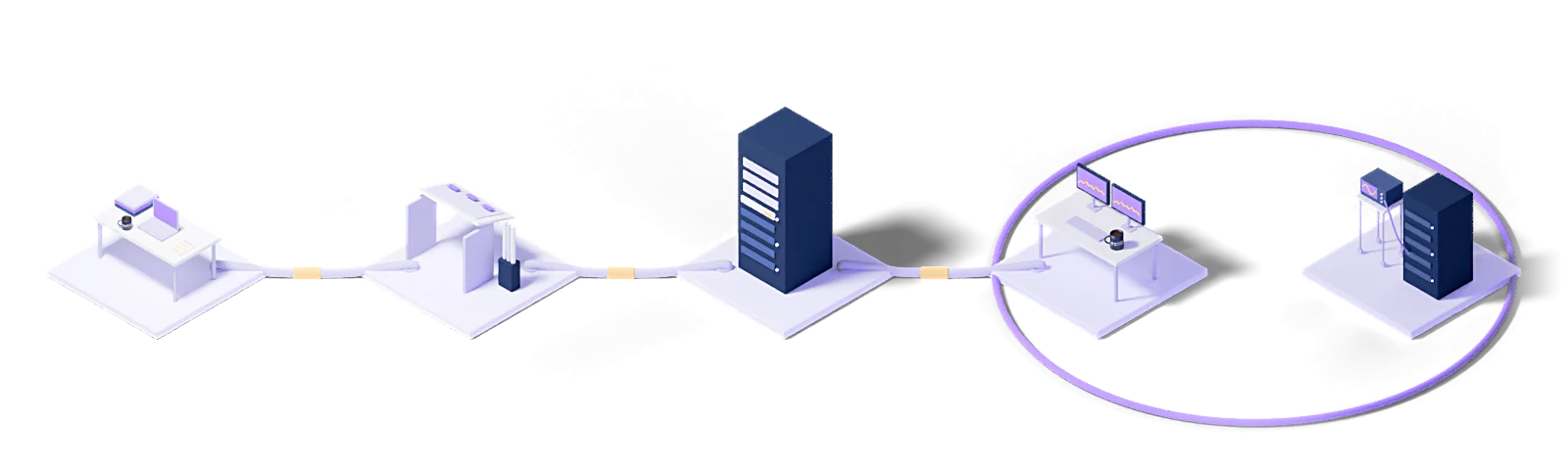
Assess
Baseline the current state, name the gaps and put the success criteria in writing.
Design
Architect the target operating model and the toolchain it needs.
Deploy
Implement, configure and validate in a staged rollout.
Operate
24/7 management with contracted response times and proactive monitoring.
Improve
Continuous improvement driven by metrics, incidents and changes in the business.
Every engagement runs under a written SLA: a commitment, not a best-effort promise.
Dedicated engineers who know your stack. No generalist help-desk tier in between.
Service reviews every two weeks, roadmap updates every quarter.
The concepts behind this service
- Data migration
- Moving data from one system or storage platform to another.
This section explains the technical terms used on this page. The definitions come from Eclit's own technology glossary, and each term links through to its full entry there.
The full technology glossary →Knowledge Hub
What we have written about running and managing technology, collected in one place.
PostgreSQL or MongoDB? The Answer Depends on Access Patterns, Not Data Shape
4 min readVMware Licensing Changed: Should We Move to Proxmox?
5 min readKVKK Cross-Border Data Transfer: What to Check When Using the Cloud
5 min readWhat Are ETL and ELT? Data Warehouse vs Data Lake
9 min read01What most often goes wrong in integration projects?
Data format and business rule mismatches. Two systems interpret the same field differently: date format, currency, null handling. When these surface in production rather than in design, the cost multiplies, which is why we profile the data early.
02Point-to-point integration or a middleware layer?
With three or four systems, point-to-point is enough. As the number grows, connections grow quadratically and maintenance becomes impossible; past that threshold you need middleware or an event-driven architecture. Adding one before you reach that point is unnecessary complexity.
03Does it need to be real time, or is batch enough?
It depends on the business need. Real-time integration is more complex and more fragile; where delay costs the business nothing, an overnight batch is both cheaper and sturdier. That is a business decision, not a technical one.
04What happens when an integration fails?
Retry policy, dead letter queue and alerting. An integration that fails silently is more dangerous than one that was never built, because everyone assumes the data is flowing. We build monitoring into the integration itself.
05Is integration with legacy systems possible?
Usually yes: file-based exchange, database-level reads, or screen scraping as a last resort. The method depends on the interfaces the legacy system offers, and its fragility is accepted up front and monitored.
Let's work out where to start
Within two weeks you get it in writing: what works, what carries risk, and a prioritized roadmap.
Request a conversation