Secure Patch Management Platform
Talisman is Eclit's fully automated patch management platform. Built for organizations that cannot afford gaps: CVE tracking, pre/post task automation, compliance reporting and policy-driven scheduling, all in one place.
What we deliver
Automation of the full patch cycle: discovery, scheduling, pre-task execution, patch deployment, post-task verification and sign-off, no manual intervention required.
Real-time CVE feed integration with automatic mapping to your asset inventory. Talisman flags affected systems instantly and prioritizes remediation by CVSS score and exposure.
Write and run custom pre-patch tasks (e.g., database quiesce, backup trigger, service stop) and post-patch tasks (e.g., service restart, health check, rollback validation) as part of every patch run.
Auto-generated compliance reports mapped to Cyber Essentials, PCI-DSS, ISO 27001 and internal policy frameworks. Auditor-ready at any time, no manual collation required.
Define patching windows, exclusion periods, ring-based rollout sequences and emergency patch fast-tracks, all governed by configurable policy, not manual scheduling.
Automated rollback triggers if post-patch health checks fail. A full state capture before every patch run means you can restore in minutes.
How it works
Every engagement follows the same five steps: baseline the current state, design the target model, roll out in stages, operate it, and improve against measurements.
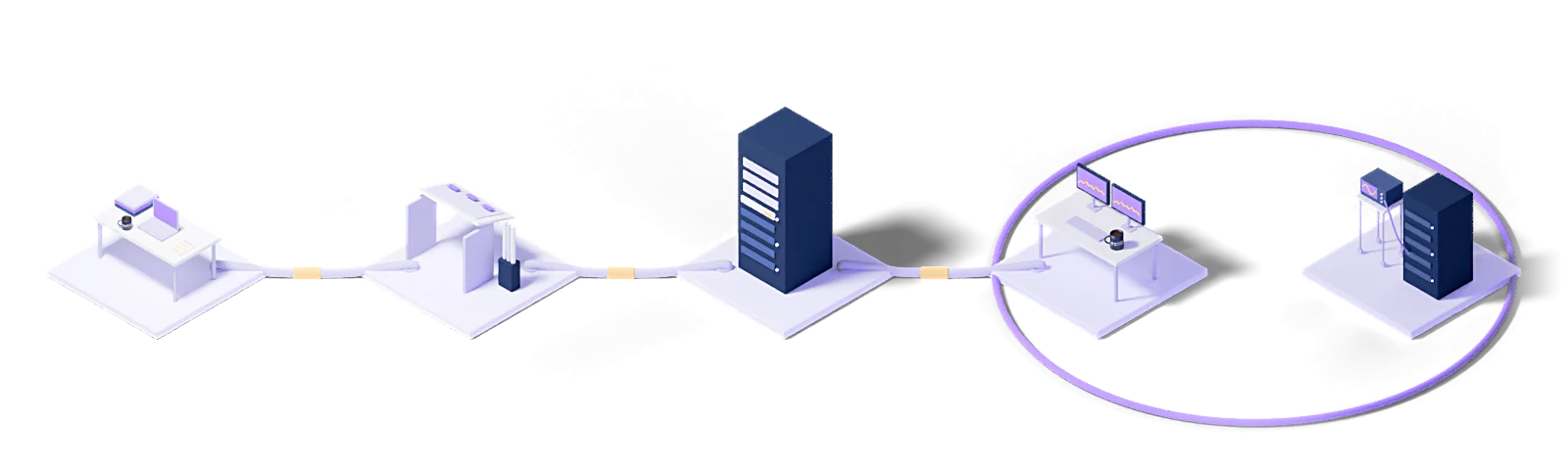
Assess
Baseline the current state, name the gaps and put the success criteria in writing.
Design
Architect the target operating model and the toolchain it needs.
Deploy
Implement, configure and validate in a staged rollout.
Operate
24/7 management with contracted response times and proactive monitoring.
Improve
Continuous improvement driven by metrics, incidents and changes in the business.
Every engagement runs under a written SLA: a commitment, not a best-effort promise.
Dedicated engineers who know your stack. No generalist help-desk tier in between.
Service reviews every two weeks, roadmap updates every quarter.
Knowledge Hub
What we have written about running and managing technology, collected in one place.
01What separates Talisman from an ordinary patching tool?
How safely it applies the patch: dependency ordering, rollout in phased waves, a health check after each wave and an automatic stop when a check fails. A patching tool installs the patch; the hard part is making sure the system still works afterwards.
02If a system breaks after patching, can we roll back?
Yes. System state is captured before each wave, and the rollback plan is written in advance. That is also why rollout is phased: if a problem appears in the first wave, it never reaches the rest of the environment.
03Which operating systems and applications are covered?
Operating system patching across Linux distributions and Windows Server, plus common middleware and runtime components on top. Scope is set by the inventory, because a component that is not in the inventory is never noticed as unpatched.
04How quickly is a critical vulnerability patched?
Target times are set in the contract for each severity level, and actual times are measured. Critical vulnerabilities follow a different flow: impact assessment, fast test, emergency window. The monthly report shows the measured time against the target.
05Do you patch outside the maintenance window?
Only for critical vulnerabilities, and with notice. Routine patching stays in the monthly planned window: unplanned patching can cause more downtime than the unpatched system.
Let's work out where to start
Within two weeks you get it in writing: what works, what carries risk, and a prioritized roadmap.
Request a conversation