Cloud Migration
Wave-based cloud migration delivered safely, from assessment and planning through data center exit to cloud cost optimization. The goal is to complete the migration with no production outage.
What we deliver
Assess your entire estate for cloud readiness, define migration waves and select the right migration strategy (rehost, replatform, refactor, retire) for each workload.
Execute cloud migrations in structured, risk-managed waves, with clear rollback points, pre- and post-migration testing and 24/7 hypercare support through every cutover.
Plan and execute a complete data center exit, from asset rationalization and colocation consolidation through to cloud landing zone delivery and network re-architecture.
Move beyond lift-and-shift. Re-architect and modernize applications to take full advantage of cloud-native services, containers, serverless, managed databases and PaaS offerings.
Right-size, reserve and architect for cloud cost efficiency, eliminating waste, identifying savings and building a FinOps practice that keeps costs under control as you scale.
Design and enforce cloud security posture from day one: IAM, network controls, encryption, logging and compliance alignment built into your cloud landing zone architecture.
How it works
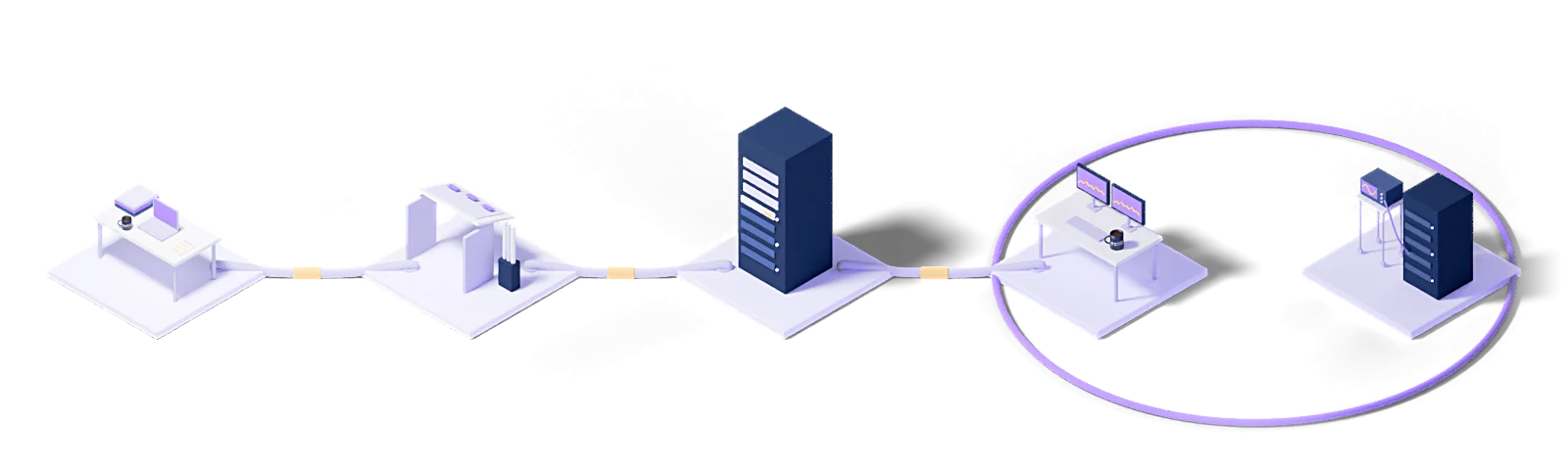
Every engagement follows the same five steps: baseline the current state, design the target model, roll out in stages, operate it, and improve against measurements.
Assess
Baseline the current state, name the gaps and put the success criteria in writing.
Design
Architect the target operating model and the toolchain it needs.
Deploy
Implement, configure and validate in a staged rollout.
Operate
24/7 management with contracted response times and proactive monitoring.
Improve
Continuous improvement driven by metrics, incidents and changes in the business.
Every engagement runs under a written SLA: a commitment, not a best-effort promise.
Dedicated engineers who know your stack. No generalist help-desk tier in between.
Service reviews every two weeks, roadmap updates every quarter.
Knowledge Hub
What we have written about running and managing technology, collected in one place.
What Is Cloud Migration? Strategies, Steps and Risks
8 min readWhat Is Cloud Computing? Cloud Models and Types
7 min readKVKK Cross-Border Data Transfer: What to Check When Using the Cloud
5 min readBDDK Treats Cloud as Outsourcing: What Changes for Banks
5 min readPostgreSQL or MongoDB? The Answer Depends on Access Patterns, Not Data Shape
4 min readWhy Data Residency Alone Does Not Make a Sovereign Cloud
7 min read01What is the cloud migration service, and what does it cover?
We move your servers, data and applications from your own data center to the cloud, or from one cloud to another. The scope: an assessment that starts with a strategy and a target for each workload; the landing zone; migration in risk-driven waves with a rollback point and tests for every wave; hypercare after the cutover; data center exit and cost optimization after the move. If you wish, the team that migrates also runs the environment afterwards.
02How long does a migration take?
It depends on dependency complexity, not server count. Twenty independent servers take weeks; twenty interdependent ones take months. A dependency map is produced first so the timeline can be realistic.
03Should we lift and shift or rewrite?
There are four more options between those two. For most organizations the right answer is mixed: non-critical workloads move as they are, high-cost ones move to cloud-native services, aging ones are retired. The decision is made per application.
04Is there a risk of data loss during migration?
Not with the right method. Continuous replication pre-synchronizes the target and only the final delta transfers at cutover. Pre-cutover verification and a rollback path are documented for every wave.
05Will moving to the cloud reduce our costs?
Not automatically. Over-provisioned servers moved one-to-one can cost more in the cloud. The savings come from right-sizing against real usage and switching off what is unused.
06Do you also operate the environment after migration?
Yes, if you want us to. When the team that ran the migration also operates the environment, no knowledge is lost in handover. Handing over to another team is also possible, and in that case we deliver runbooks.
Let's work out where to start
Within two weeks you get it in writing: what works, what carries risk, and a prioritized roadmap.
Request a conversation