Cloud Adoption & Platform Migration
Cloud adoption and platform migration. Readiness assessment, per-workload placement decisions, wave planning, and post-migration cost and compliance verification.
What we deliver
The existing estate assessed for portability; application dependencies, licensing constraints and data volume feeding the migration plan.
Public cloud, private cloud or stay-in-place decided separately for each workload against cost, performance and compliance criteria.
Systems that must move together grouped, wave order set by risk, and a way back defined for each wave.
Transfer method for large datasets, cutover window calculation, incremental synchronization and integrity verification at switchover.
The location of personal and regulated data settled before the move, with backup location treated as a separate question.
Actual spend tracked against plan, sizing corrections applied, and unused resources cleaned up.
How it works
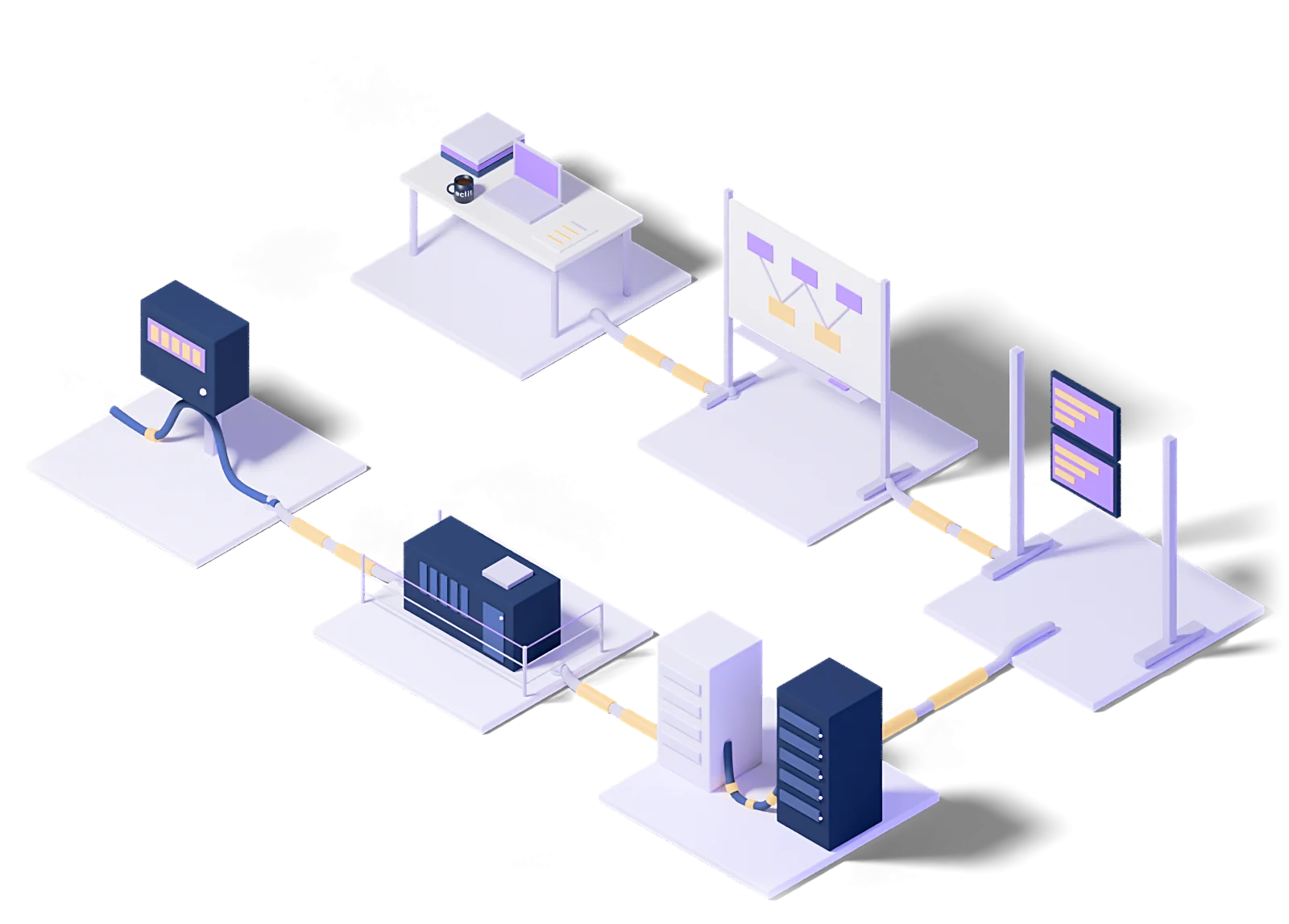
Every engagement follows the same five steps: baseline the current state, design the target model, roll out in stages, operate it, and improve against measurements.

Assess
Baseline the current state, name the gaps and put the success criteria in writing.
Design
Architect the target operating model and the toolchain it needs.
Deploy
Implement, configure and validate in a staged rollout.
Operate
24/7 management with contracted response times and proactive monitoring.
Improve
Continuous improvement driven by metrics, incidents and changes in the business.
Every engagement runs under a written SLA: a commitment, not a best-effort promise.
Dedicated engineers who know your stack. No generalist help-desk tier in between.
Service reviews every two weeks, roadmap updates every quarter.
The technologies we run this on
Knowledge Hub
What we have written about running and managing technology, collected in one place.
What Is Cloud Migration? Strategies, Steps and Risks
8 min readWhat Is Cloud Computing? Cloud Models and Types
7 min readKVKK Cross-Border Data Transfer: What to Check When Using the Cloud
5 min readBDDK Treats Cloud as Outsourcing: What Changes for Banks
5 min readPostgreSQL or MongoDB? The Answer Depends on Access Patterns, Not Data Shape
4 min readWhy Data Residency Alone Does Not Make a Sovereign Cloud
7 min read01What should the first step of cloud adoption be?
An application inventory and dependency map. Without knowing which application talks to which, the migration order cannot be planned. In practice, the most common failure point is hidden dependencies surfacing after the move.
02How long until our internal team is cloud-ready?
A few months with training; real capability comes from operating the first production workload. In a handover model your team is involved from the start; operating an architecture explained after the fact is far harder.
03Do you set up the governance framework as well?
Yes: account structure, tagging standard, cost ownership, security baseline and provisioning rules. If these are not established on day one, retrofitting them six months later costs far more.
04Which workloads should not move to the cloud?
Latency-sensitive ones, those with data residency constraints, those whose license model forbids third-party infrastructure, and those close to retirement. Migrating a system due to be retired means spending the money twice.
05Is moving back possible?
If planned for, yes. An architecture deeply tied to cloud-native services is expensive to reverse; where portability matters it must be a deliberate architectural decision from the start.
Let's work out where to start
Within two weeks you get it in writing: what works, what carries risk, and a prioritized roadmap.
Request a conversation